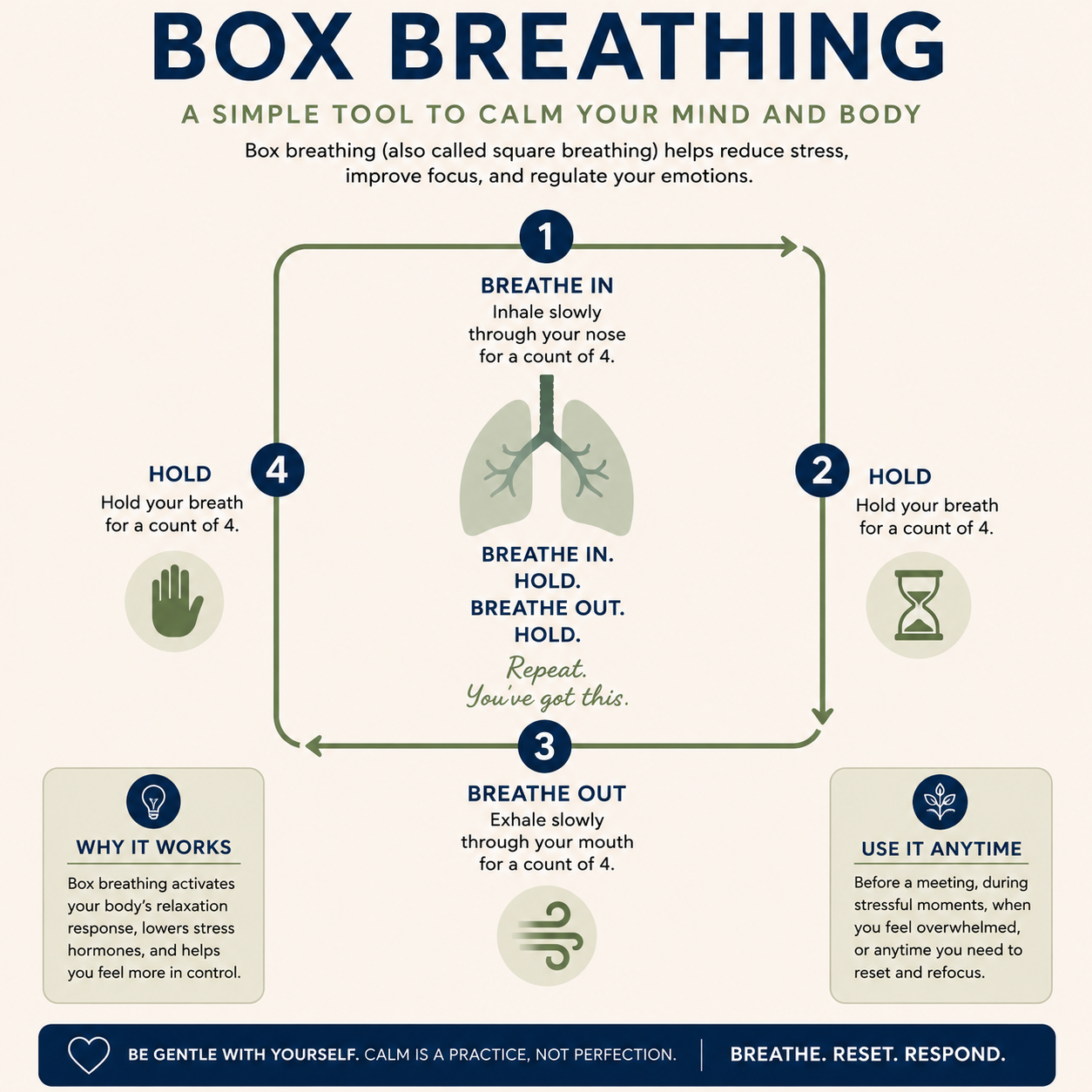
Box breathing is one of the simplest and most effective ways to calm your mind and body when you're feeling stressed, anxious, or overwhelmed. When you become anxious, your body automatically switches into "fight, flight, or freeze" mode. Your heart beats faster, your muscles tighten, your breathing becomes quick and shallow, and your brain focuses on finding danger—even if no real danger exists. Box breathing helps interrupt this stress response by slowing your breathing to a steady rhythm. As your breathing slows, your nervous system receives the message that you are safe. Your heart rate begins to decrease, your muscles relax, and the thinking part of your brain becomes more active, making it easier to think clearly instead of reacting emotionally. Research has shown that slow, controlled breathing can reduce stress hormones, improve focus, and help people feel calmer in just a few minutes (Ma et al., 2017; Zaccaro et al., 2018).
One of the greatest benefits of box breathing is that it can be used almost anywhere. It doesn't require any equipment, medication, or special training. That's why it's commonly taught to military personnel, first responders, athletes, and healthcare professionals who need to stay calm under pressure. While box breathing won't eliminate life's problems, it can help you respond to them with a clearer mind. Think of it like pressing the "pause" button on your body's alarm system. When your body calms down, your brain is better able to solve problems, communicate effectively, and make thoughtful decisions instead of acting out of fear or frustration. Practicing box breathing regularly can also make it easier to recover from stressful situations over time, improving your overall ability to cope with life's challenges (Jerath et al., 2015; Lehrer & Gevirtz, 2014).
References
Jerath, R., Crawford, M. W., Barnes, V. A., & Harden, K. (2015). Self-regulation of breathing as a primary treatment for anxiety. Applied Psychophysiology and Biofeedback, 40(2), 107–115.
Lehrer, P. M., & Gevirtz, R. (2014). Heart rate variability biofeedback: How and why does it work? Frontiers in Psychology, 5, 756.
Ma, X., Yue, Z. Q., Gong, Z. Q., Zhang, H., Duan, N. Y., Shi, Y. T., Wei, G. X., & Li, Y. F. (2017). The effect of diaphragmatic breathing on attention, negative affect, and stress in healthy adults. Frontiers in Psychology, 8, 874.
Zaccaro, A., Piarulli, A., Laurino, M., Garbella, E., Menicucci, D., Neri, B., & Gemignani, A. (2018). How breath-control can change your life: A systematic review on psychophysiological correlates of slow breathing. Frontiers in Human Neuroscience, 12, 353.